ServicesReverse Osmosis
Reverse Osmosis in Santa Clarita
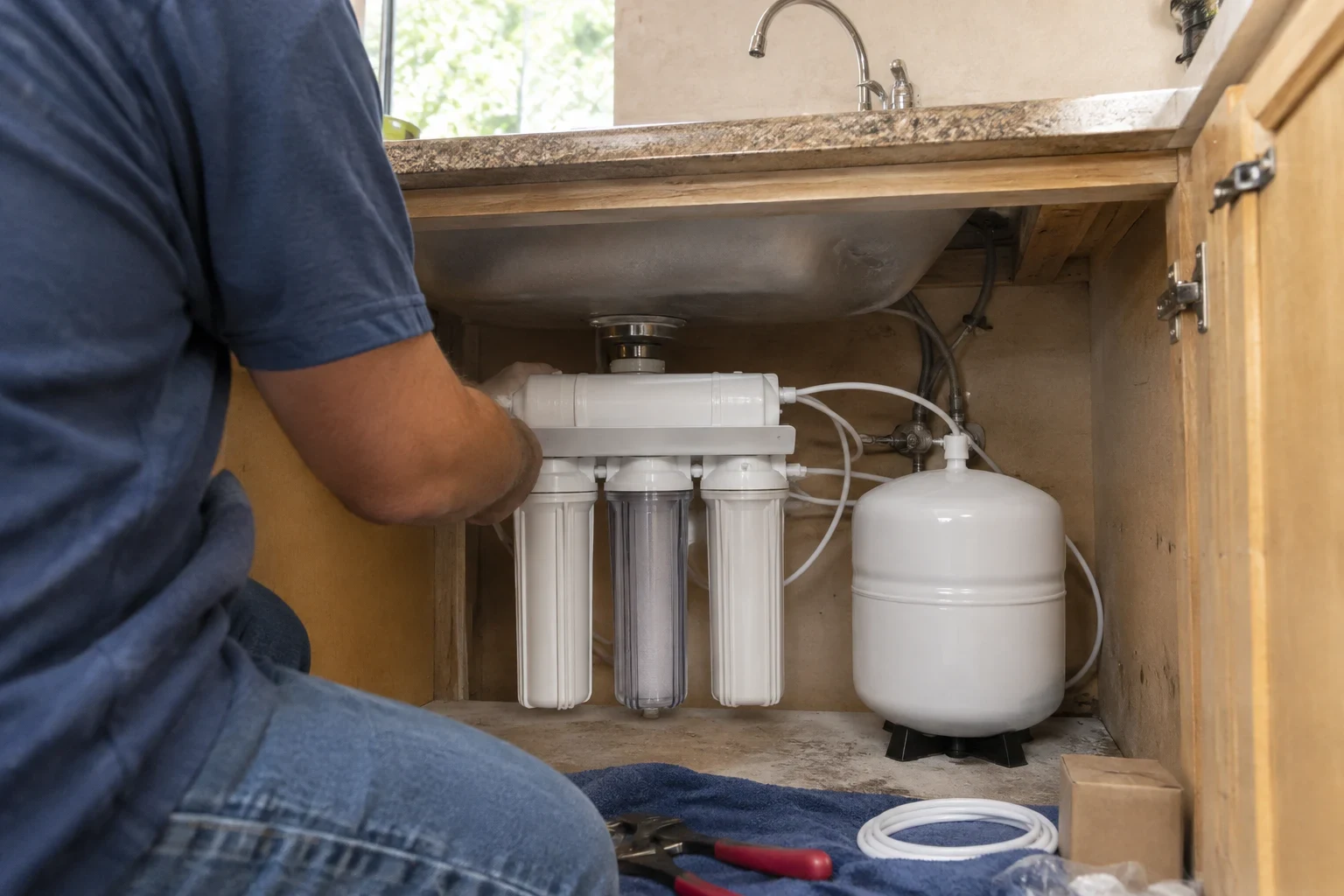
A reverse osmosis system sits quietly under your kitchen sink and sends clean, clear water to its own faucet for drinking, coffee and cooking. We install it neatly, check back once you have lived with it, and leave you a simple plan for filter changes.
How reverse osmosis works under your sink
The core of the unit is a very fine membrane. Water passes through it, while dissolved salts, minerals and many trace contaminants stay behind and get flushed to the drain. Ahead of the membrane, a sediment filter catches grit and a carbon filter removes chlorine, which protects the membrane and gets rid of the pool-water taste. Treated water waits in a small tank and comes out of a separate faucet next to your regular one.
Pick it when what matters most is the water you drink and cook with, rather than every faucet in the house. A lot of local homeowners call us after years of carrying bottled water in from the car or scraping white scale out of the kettle. For treated water at more than one sink, see our City Water Filtration and Dual Tank Water Filtration pages for larger systems.
What we value most happens after install day. When the system has been running a while, we follow up and walk through its care with you, so the water keeps tasting like it did at the start.
What your installation includes
- Multi-stage under-sink unit
- Sediment and carbon prefilters, the membrane, a storage tank and a final polishing filter, positioned so you can reach every housing when a change comes due.
- Dedicated drinking faucet
- Where a sprayer or soap dispenser hole already exists, we use it. If the countertop needs a new opening, we drill it with care and seal it, paying close attention to stone and quartz edges.
- Clean supply and drain connections
- We connect to the cold line at the shutoff valve and take the drain line to a fitting above the trap. Tubing is trimmed to length and secured so the cabinet still holds your things.
- Optional fridge connection
- For cold filtered water and ice from the refrigerator door, we extend tubing from the unit to the fridge and make the connection there.
- Startup flush and leak check
- We fill and flush the system, empty the first tank the way the manufacturer specifies, and look over every fitting for drips before we pack up.
- Follow-up and care plan
- We leave a written filter schedule listing the part numbers for your unit. Later we check back to hear how the water tastes and answer anything that has come up.
Signs an under-sink reverse osmosis system makes sense
A pantry stacked with bottled water
If the tap is only good for rinsing dishes, a unit under the sink means no more store trips, no more hauling cases and no more empty bottles filling the recycling bin.
Scale inside the kettle and coffee maker
Minerals in the water build up as white crust in kettles and leave spots on glasses. Reverse osmosis strips out most of them from your drinking and cooking water.
A pool smell in your glass
The carbon filters remove the chlorine the city adds for disinfection, so water from the faucet tastes clean and neutral.
Murky ice and dull coffee
A high level of dissolved solids clouds ice cubes and flattens the taste of coffee and tea. Purer water usually makes a clear difference in both.
Aging pipes in the house
In older plumbing, metals can seep into water that sits in the pipes overnight. A membrane at the kitchen faucet adds a layer of protection at the spot where you pour your drinking water.
How the install goes
- 1
A conversation by phone
We ask about your sink, your countertop and what bothers you about the water now. That tells us which system fits and whether you want a fridge line.
- 2
Laying out the cabinet
On the day, we clear the space under the sink, protect the floor and plan around a garbage disposal or other plumbing so nothing is cramped.
- 3
Installation and startup
We mount the unit, set the faucet, make the supply and drain connections, then fill and flush the system. Most kitchen installs are finished within a single visit.
- 4
Walkthrough before we leave
We show you the shutoff, the tank valve and where each filter sits, and leave the schedule taped inside the cabinet door.
- 5
We check back
After you have lived with the system for a bit, we follow up to ask how it is running, confirm the flow is steady and answer questions about the first filter change.
What shapes the cost
Most of the price comes from the system you pick and the way your kitchen is laid out. Installation is free, since we cover that cost. On the phone we go through each option, so you can see which choices move the quote and which do not.
- Tank or tankless design
- A conventional storage tank system and a compact tankless unit are priced differently and suit different cabinets. Tankless models free up space but generally want a power outlet close by.
- Added stages
- An optional mineral cartridge returns small amounts of calcium and magnesium to soften the flavor of very pure water. An ultraviolet stage or an extra carbon cartridge also raises the cost and adds one more part to replace over time.
- Faucet and countertop
- Choosing a faucet finish to match your existing fixtures, or boring a new hole through stone or quartz, changes both the parts list and the time on site.
- Extra lines and pressure
- Sending treated water on to the refrigerator means more tubing and fittings. Where household pressure runs low, a permeate pump may be needed to keep the membrane working efficiently.
What people ask about reverse osmosis
Something not covered here? (661) 441-3270
Does reverse osmosis send water down the drain?
Some, yes. While the tank fills, the membrane clears itself by routing part of the incoming water to the drain. Newer units and a permeate pump cut that down, and we give you a straight answer on how much the recommended unit should drain.
Does the water end up tasting flat?
Some people find very pure water a bit thin. A remineralizing cartridge puts back a small amount of calcium and magnesium, and most people who add one like the fuller taste.
When do the filters get replaced?
Prefilters usually need changing once or twice a year, depending on use. The membrane lasts far longer, often several years, based on your household and the water coming in. We leave a written schedule for your unit and go over it again at our check-back.
Will it fit under a sink that has a garbage disposal?
In most cases, yes. We arrange the parts around the disposal and drain, and a tankless or slim-tank unit works well in a crowded cabinet.
Can it feed my refrigerator and ice maker?
Yes. We run a separate line from the unit to the fridge, so both the water dispenser and the ice maker get filtered water.
Clean drinking water, poured from its own faucet
Give us a sense of your cabinet space and how you use water in the kitchen, and we will point you to a system that suits it. We work in Santa Clarita, Stevenson Ranch, Castaic and nearby communities.