ServicesWell Water Filtration
Well Water Filtration in Santa Clarita
We install filtration for private wells that removes sand and grit, the iron and manganese that stain fixtures, and the rotten-egg smell of sulfur. Once it is running, we check in on the system and show you exactly how to look after it.
Filtration built around what your well delivers
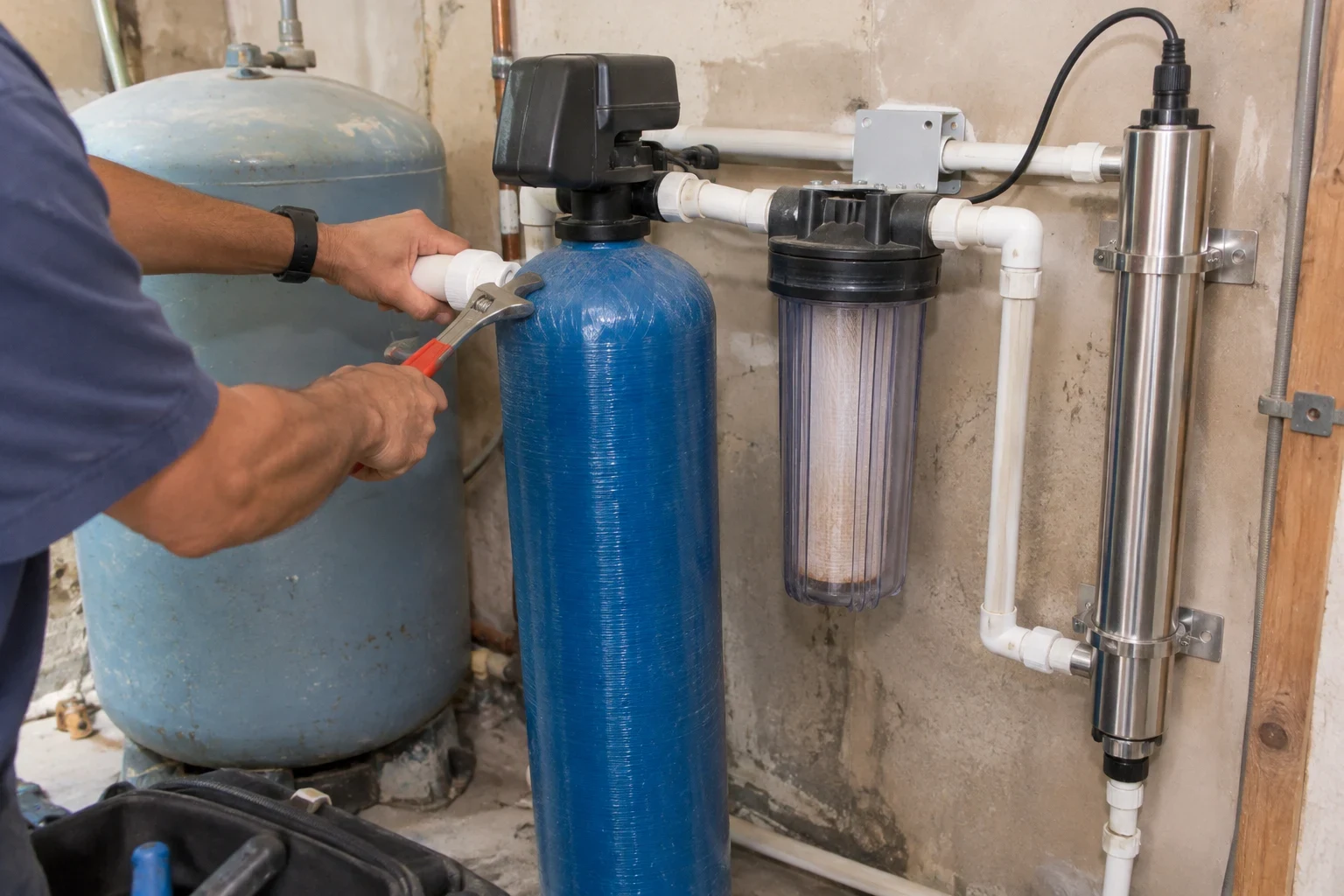
A private well gives you water that no utility treats before it reaches your tap. What comes up depends on the ground around the well. It might be fine sand and silt, dissolved iron and manganese that leave orange or black marks, or hydrogen sulfide that smells like rotten eggs. Well water filtration puts a system on the main line past your pressure tank, so water is cleaned before it reaches your faucets, shower and appliances.
We match the filter media to your water rather than to a stock package. If you have a recent lab report for your well, have it nearby when we talk and we will read it with you. If the problem is mostly what you see and smell, we explain what those signs usually point to and what a filter can and cannot handle.
The job does not end when the tank is plumbed in. We check back once the system has settled to confirm the backwash settings and the pressure, and we walk you through the few habits that keep it working well for years.
What goes into a well water system
- Sediment prefilter
- A cartridge or spin-down housing catches sand and grit first. That protects the control valve and the main tank from wear, and it is the part you will service most often, so we mount it where you can reach it easily.
- Main tank with media matched to your water
- The main tank holds media chosen for what your well carries, whether that is iron, manganese, sulfur odor or a mix. A control valve backwashes the tank on a schedule, flushing trapped particles to drain so the media stays clean.
- Carbon stage for taste and smell
- Where odor or an earthy taste lingers, we add a carbon stage downstream of the main tank. It polishes the water so it smells and tastes clean at every tap in your home.
- Bypass valve and neat pipework
- We fit a bypass valve so the system can be isolated for a cartridge change while your faucets still run. Pipe runs are kept square, strapped and labeled, and the backwash line ends at a drain with an air gap.
- Free installation
- Installation is free; we cover the cost. You pay for the equipment, and we explain what each piece does before anything goes in.
- Care walkthrough and follow-up
- Before we leave, we show you how to read the valve, change the prefilter and spot early signs that something needs attention. Then we check back once the system has settled in.
What tells you a well needs filtering
Rusty rings on fixtures
Reddish-brown marks in the toilet bowl, sink or tub are a common clue to dissolved iron. Over time it discolors laundry too and collects inside fixtures.
Dark streaks or specks
Black or charcoal-colored residue often comes from manganese. Water can pour out looking perfectly clear and still leave these marks behind.
A smell like rotten eggs
Hydrogen sulfide gas causes that odor, and it is usually strongest when you run hot water. Ignored, it can tarnish silverware and darken some fixtures.
Sand in screens and tanks
When grit settles in faucet aerators, toilet tanks or at the base of the water heater, sediment is making it through. It wears valves and blocks the inlets on appliances.
Cartridges that choke quickly
A filter that goes brown and drags down your pressure in a matter of weeks is too small for what your well sends it. Putting a backwashing tank in front of it usually fixes the problem.
What shapes the price
Because we cover installation, the price comes down mainly to the equipment your water calls for. Two wells a few miles apart can need very different systems. We explain each line before you decide, so you know what you are paying for and why.
What is in your water
Sediment alone needs a simpler setup than iron, manganese and sulfur together. Each problem may call for its own media or stage.
Flow and household size
A larger household or a high-yield well needs a bigger tank so pressure holds up when several taps run at once.
Number of stages
A prefilter and one main tank cost less than a system that adds a carbon stage for taste and smell.
Ongoing cartridges and media
Prefilter cartridges are a regular small expense, and tank media is replaced every several years. We tell you what to expect so nothing comes as a surprise.
From first call to follow-up
- 1
We start on the phone
Describe what you notice in your water, from stains to smells to taste, and mention any lab report you have on hand. We ask how many people live in your home and how your well is plumbed, then lay out the options that make sense.
- 2
We look at your setup
Next we see the pressure tank, the room around it, the incoming line and a workable spot for the backwash drain. Those details settle tank size and placement before we order a thing.
- 3
Installation day
With the water off, we cut in the bypass, mount the prefilter and tanks, and route the drain line. The media is flushed, the control valve is programmed and we confirm pressure at a faucet. We take the packaging and pipe offcuts away when we go.
- 4
We check back
After the system has had time to run through normal daily use, we reach out to see whether the backwash schedule fits your water use and whether the water looks and smells as it should. Questions tend to surface after a few weeks, and this is the time to ask them.
What people ask about well water filtration
Will filtering make my well water safe to drink?
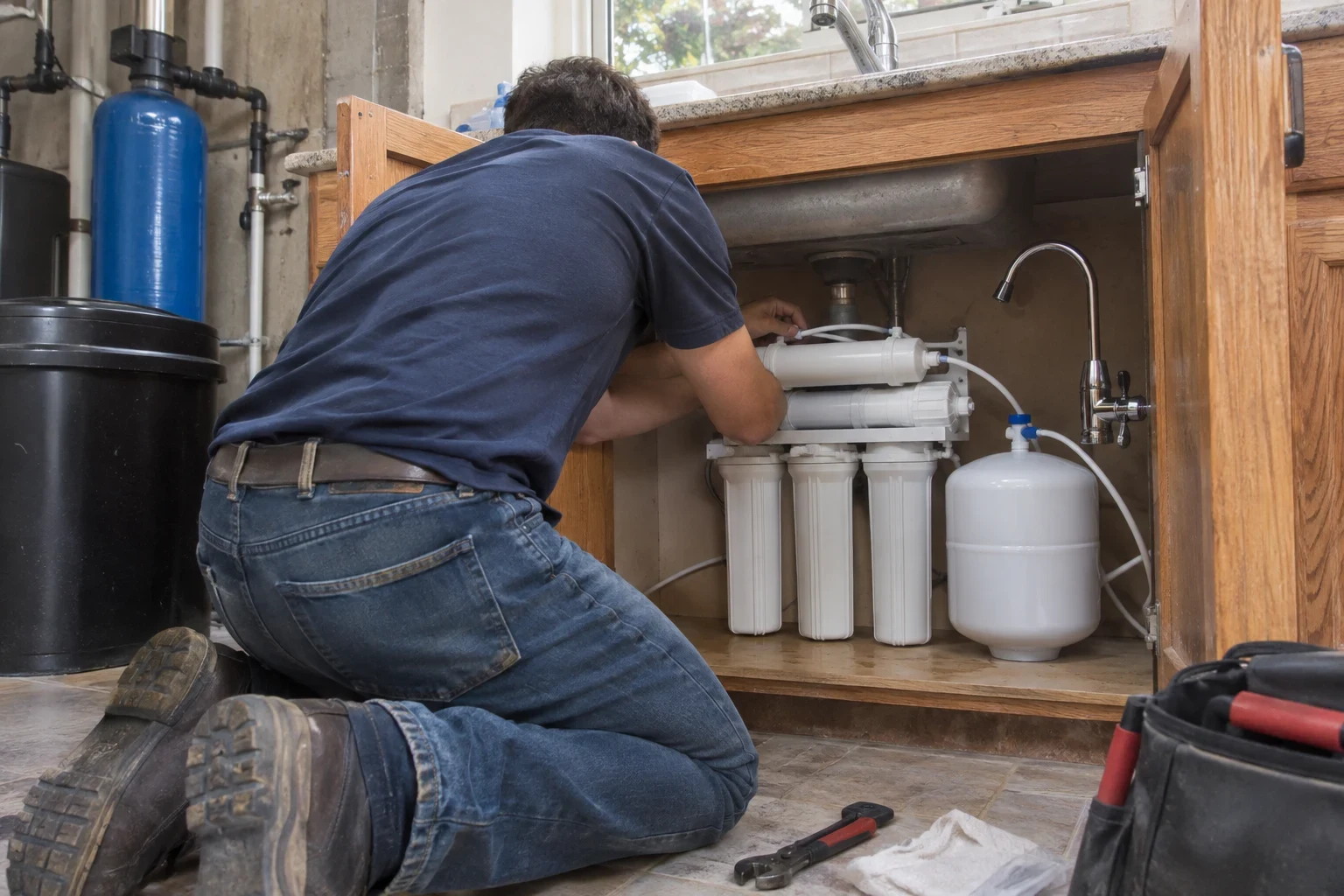
These systems deal with sediment, iron, manganese, odor and taste. They do not disinfect, so bacteria are not treated. If bacteria or nitrates concern you, send a sample from your well to a drinking water lab. Plenty of households also put an under-sink reverse osmosis unit in for drinking and cooking.
How much care does the system need?
Backwashing happens on its own, typically overnight. Plan on a new sediment cartridge every few months, or sooner if your well brings up a lot of sand. We show you the change on install day, and with the bypass closed it takes about two minutes.
Will I lose water pressure?
A correctly sized system should leave faucets and showers feeling the same. Weak pressure after an install usually points to a tank too small for the household's use. We note the pressure on install day and compare it with a fresh reading at our follow-up.
Does backwashing waste water?
Every backwash sends a fixed amount to drain, and we set its timing to how much water your household really uses. Cleaning the media only when needed keeps the load on your septic system or drain line under control.
How is this different from city water filtration?
City water is disinfected before it gets to you, so filtering it mostly targets chlorine taste and smell. Well water brings up whatever the surrounding ground holds, like sand, iron, manganese and sulfur, which calls for different media and a different setup.
Clearer water from your well, and someone who checks back
Describe the stains, smells or grit you are noticing, and we will talk through the system that suits your well and where it would sit in your home. We serve Santa Clarita and nearby communities such as Castaic and Agua Dulce.