ServicesWhole Home Water Filtration
Whole Home Water Filtration in Santa Clarita
We fit one filtration system on the main line feeding your home, so the shower, kitchen faucet, laundry and water heater all draw treated water. Once you have lived with it a few weeks, we check back, review the system with you and explain the simple care that keeps it running well.
One System at the Point of Entry
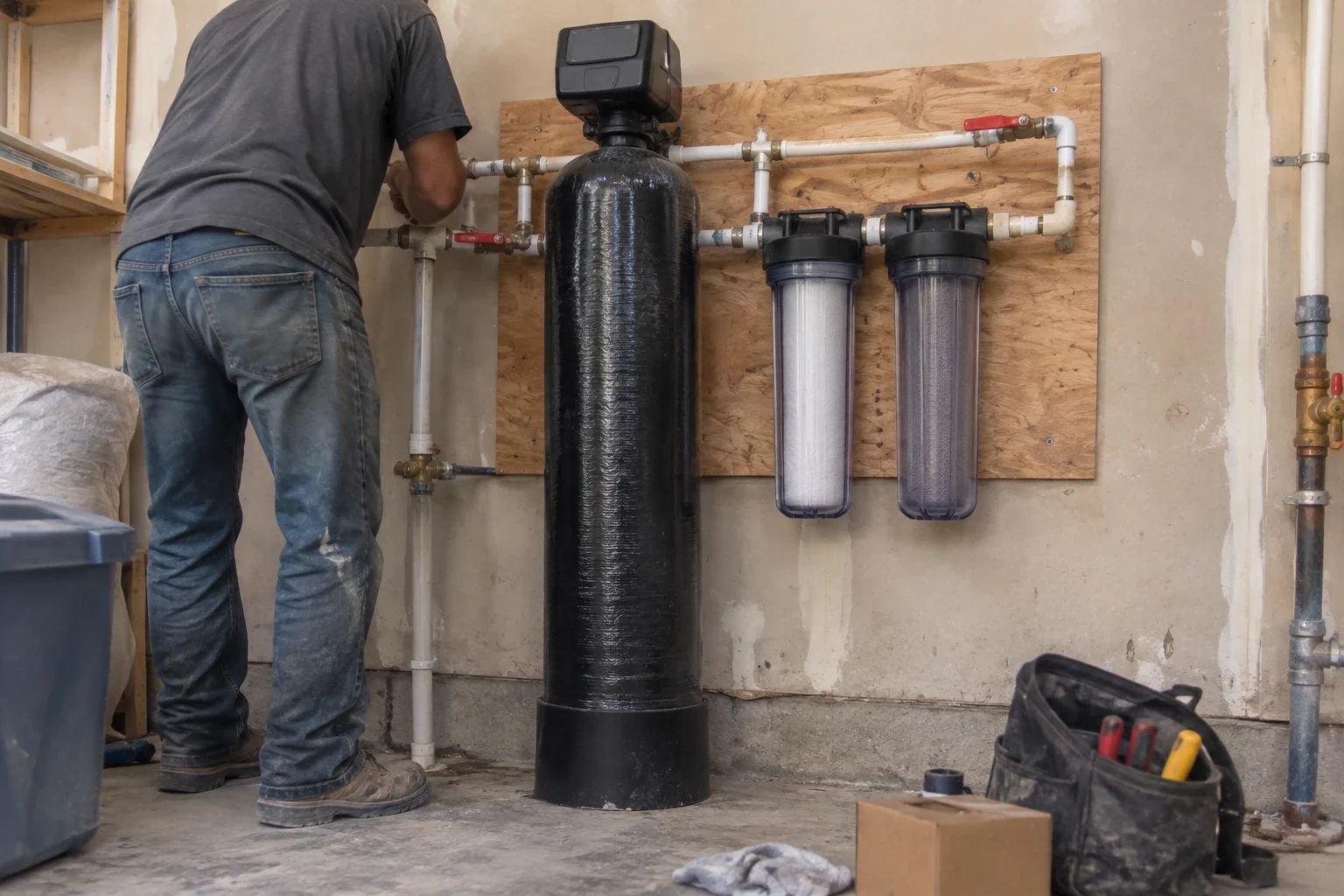
The system mounts on your main supply line, most often close to the shutoff valve in the garage or on an outside wall. Water runs through the tanks first, then branches to the kitchen, bathrooms, laundry and water heater. You get treated water from every tap rather than one pitcher in the fridge.
Most systems we fit use a sediment pre-filter followed by a tank of activated or catalytic carbon. The carbon reduces the chlorine or chloramine taste and smell that city water carries, and the pre-filter catches grit before it reaches your fixtures. If you mainly want purer drinking water at one sink, our Reverse Osmosis page covers a better fit, and many homeowners pair the two.
What the Installation Includes
- A system sized for your home
- We choose the tank and flow rating from the number of bathrooms and people under your roof. An undersized tank falls behind when a shower and the washer run together, so we plan around your busiest stretch of the day.
- Clean tie-in to your main line
- Whether your supply is copper, PEX or galvanized, we use fittings made for that pipe. Every joint holds pressure on test before the water goes back on.
- A bypass valve
- Each install includes a bypass, which lets water skip the tanks during a media change or repair while the house keeps running water.
- Media flush and first draw
- Fresh carbon sheds fine dust, so we run the tanks until the water comes out clear before you drink from it.
- Care walkthrough
- We point out the bypass, the pre-filter housing and the signs that a change is coming up. The care schedule is left with you on paper.
- A follow-up check
- Some weeks after install, we reach out to hear how the water tastes, confirm the pressure has stayed steady and cover any questions that surfaced.
Signs Your Home Would Benefit
A chlorine smell in the shower
Hot water releases disinfectant odor into the air. If the bathroom smells like a pool, filtering at the main line addresses every shower at once.
Grit in aerators and showerheads
Small particles collecting in faucet screens point to sediment moving through your plumbing. A pre-filter stops it upstream.
Filters scattered around the house
A pitcher in the kitchen, a showerhead filter upstairs and a fridge cartridge add up. One system replaces the patchwork.
Taste you notice in cooking
Pasta water, coffee and ice all pick up the flavor of the tap. Carbon filtration makes that flavor far less noticeable.
Dry skin or dull hair after showers
Many people find chlorine harsh on skin and hair. Filtering the shower water is the simple way to see whether it helps you.
How the Job Runs
- 1
We talk on the phone
Tell us what you notice in your water and a little about your home. We describe the setup that suits it and explain what the visit will involve.
- 2
Choosing the spot
We check your main line, its pipe material and the space around it, then agree with you on where the tanks will sit and how the plumbing will be routed.
- 3
Installation day
With the water shut off and the nearby floor and walls covered, we cut in the system and bypass and pressure-test every joint. Most installs finish in one day, with the water off for only part of it.
- 4
Flushing and handover
We flush the media until the water runs clear, test flow at several faucets, and walk you through the bypass valve and care schedule. The work area is cleaned before we go.
- 5
Our follow-up
A few weeks into normal use, we reach out to make sure the water tastes right, nothing has shifted and the upkeep feels easy to manage.
What Shapes the Price
We offer free installation, so the labor of fitting the system is on us. Your cost comes down to the equipment your home needs, and that follows from how many people live there and how much water runs through the pipes. We lay out the options by phone and again at your home so you can decide with the full picture in front of you.
- Household size and flow
- Extra bathrooms and a bigger household need larger tanks with a higher flow rating. Those cost more than a compact unit built for a smaller home.
- Filter media
- Standard activated carbon does a good job on chlorine. Catalytic carbon handles chloramine better and is priced higher.
- Pre-filtration
- If sediment shows up in your aerators, a heavier pre-filter stage ahead of the carbon tank is worth adding.
- Location and pipe work
- A main line on an open garage wall is simple to reach. A line hidden in a tight closet, or one that needs rerouting, calls for more fittings and parts.
Whole Home Filtration Questions
Something not covered here? (661) 441-3270
Will a whole home system reduce the pressure at my taps?
When the tank fits the household, most people never notice a change. Weak pressure after an install usually means the equipment was undersized for the home. We size for your busiest hour and check flow at your fixtures before we pack up.
How often does the filter need changing?
The sediment pre-filter usually needs a new cartridge every few months, depending on how much grit it collects. Carbon media lasts far longer and is swapped on a schedule measured in years, based on your water use. You get that schedule in writing, and we review it with you when we check back.
Do I still need a drinking water system?
Often you do not. Carbon filtration takes care of taste and smell at every tap in your home. If you would like drinking and cooking water refined a step further, a reverse osmosis unit under the kitchen sink works well alongside it.
How is this different from dual tank filtration?
Both systems sit on the main line. Dual tank filtration divides treatment across two vessels for heavier work, while plenty of homes are well served by one carbon tank and a pre-filter. Our Dual Tank Water Filtration page covers when the second tank earns its place.
What happens once the install is done?
A few weeks after the install, we get in touch to hear how the water tastes, confirm pressure is holding and answer any questions. If something seems wrong sooner, give us a ring and we will come take a look.
Filtered Water Throughout Your Home
Tell us about your home and what you notice at the tap. We will talk you through the right system, how the install day runs and how we follow up once it is in.